Conducting The First Session
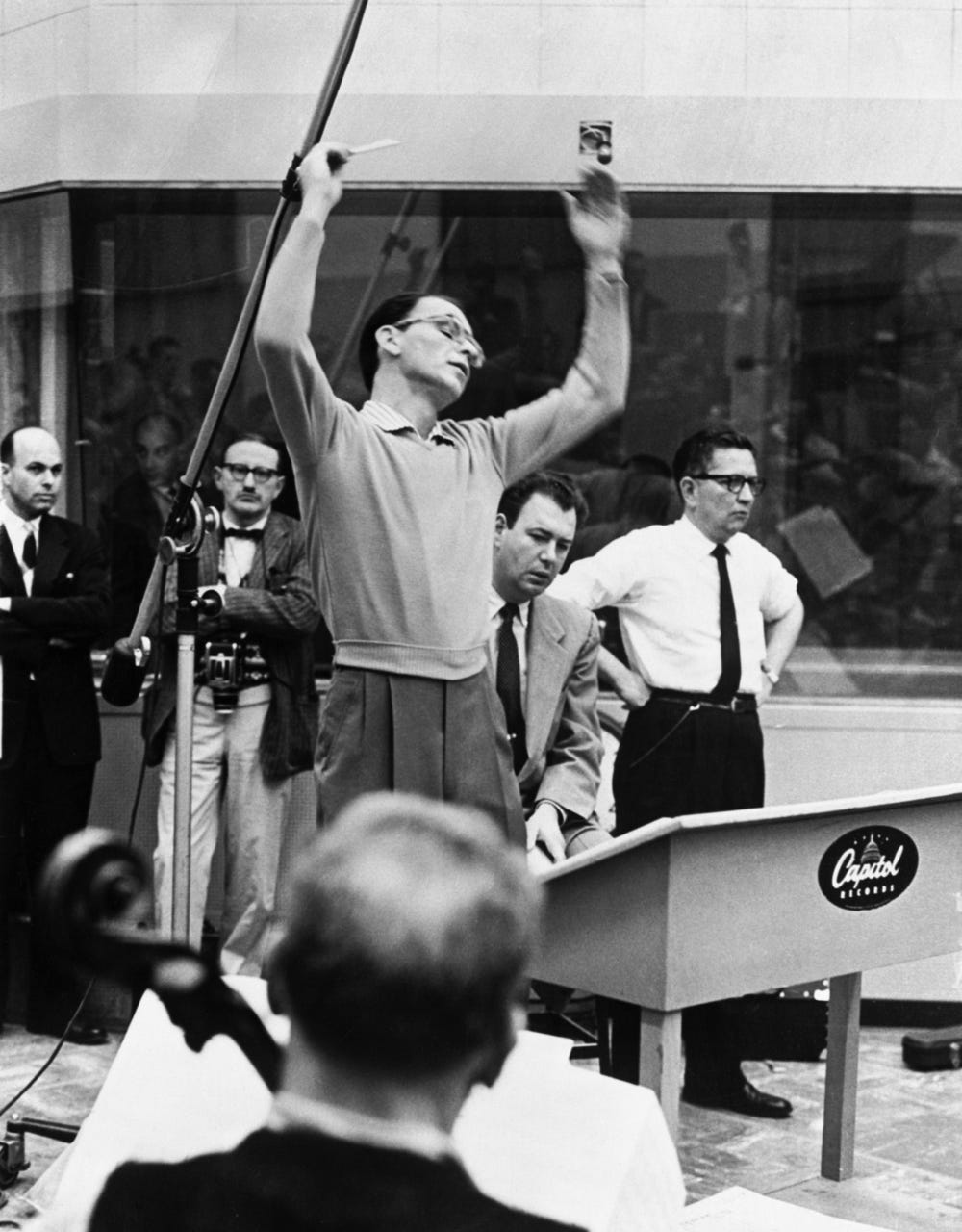
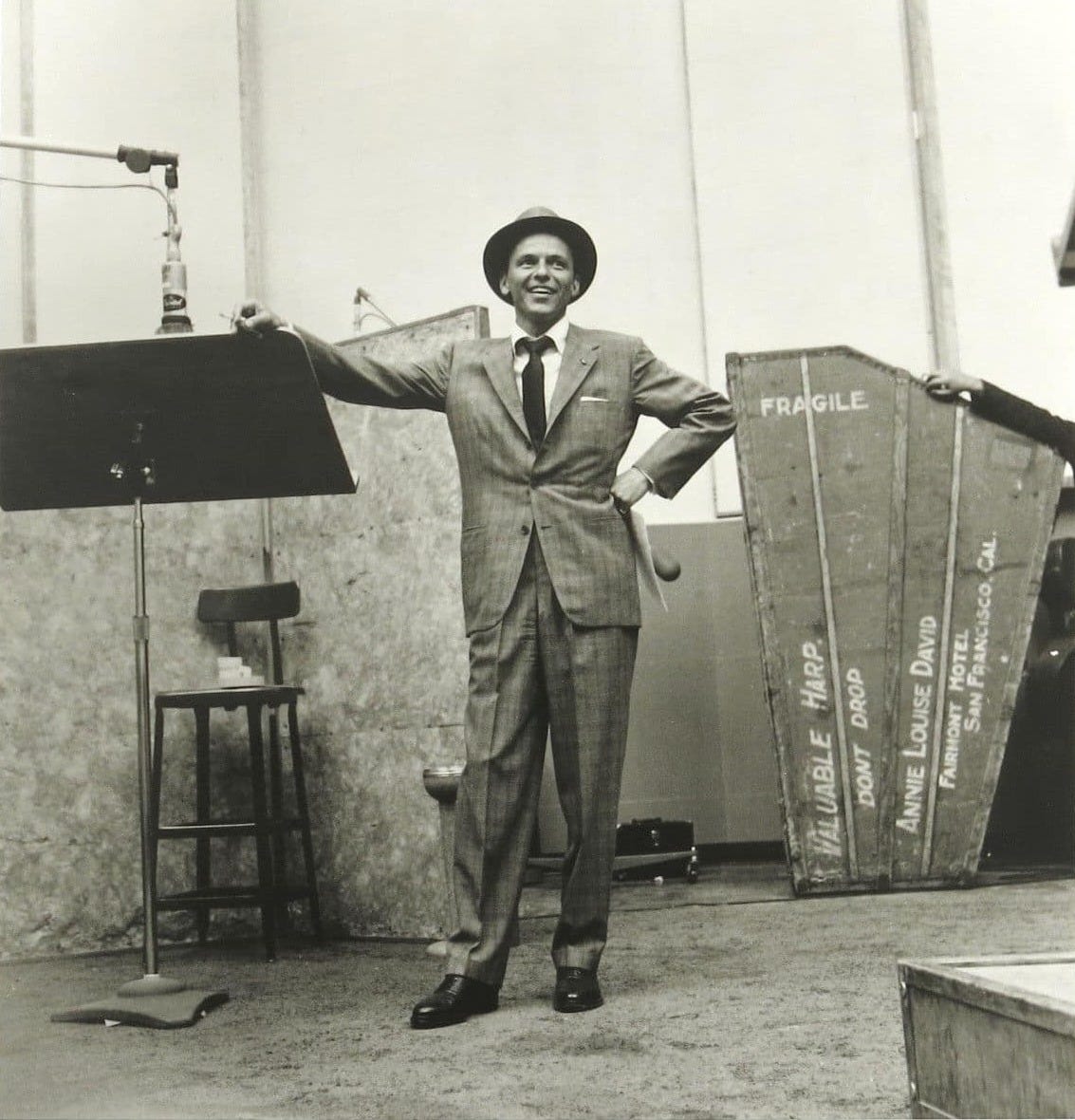
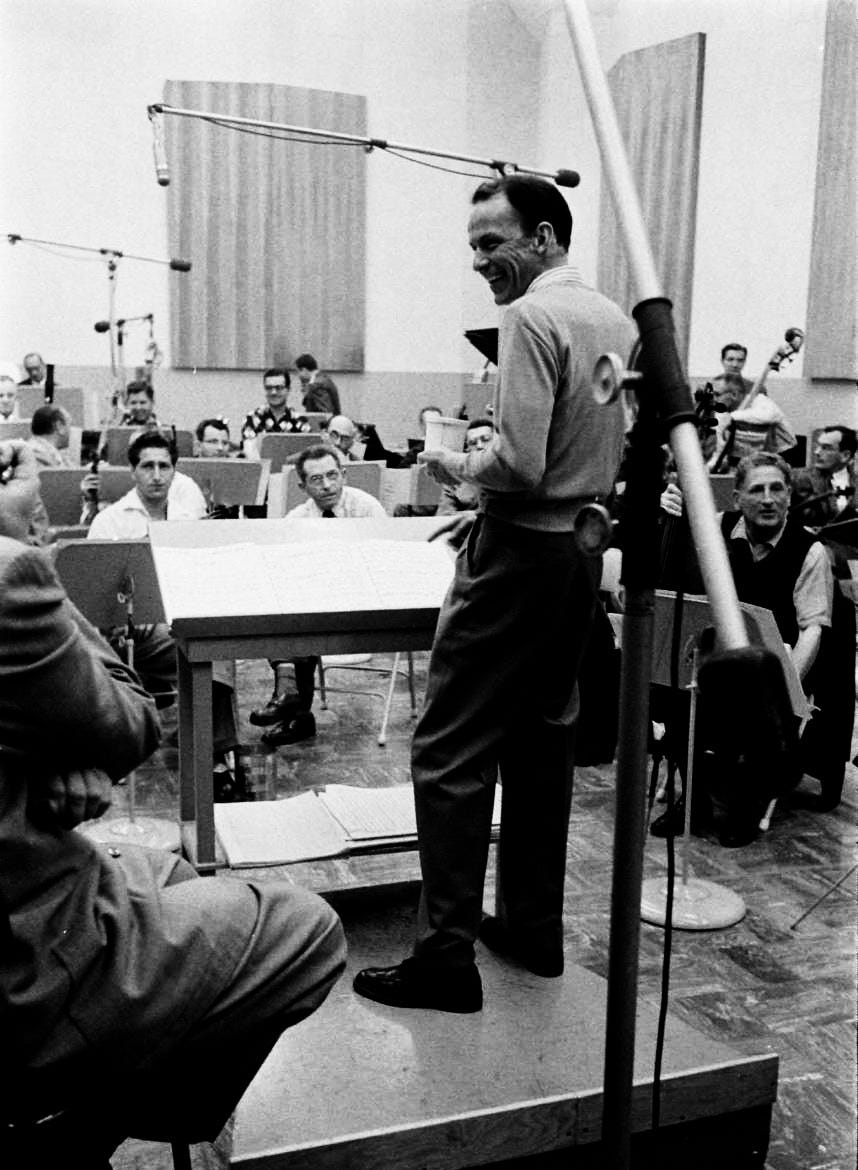
Frank Sinatra conducted, not sang, for the very first session at Capitol Studios in 1956.

Tone Poems of Color
From February 22nd to March 15th, 1956, Frank Sinatra conducted the very first sessions at Capitol Studios in the newly completed Capitol Records Tower. That’s right, “The Voice” stepped behind the conductor’s podium in Studio B and led an orchestra of 56 musicians for a beautiful album called Frank Sinatra Conducts Tone Poems of Color. He didn’t sing one note.
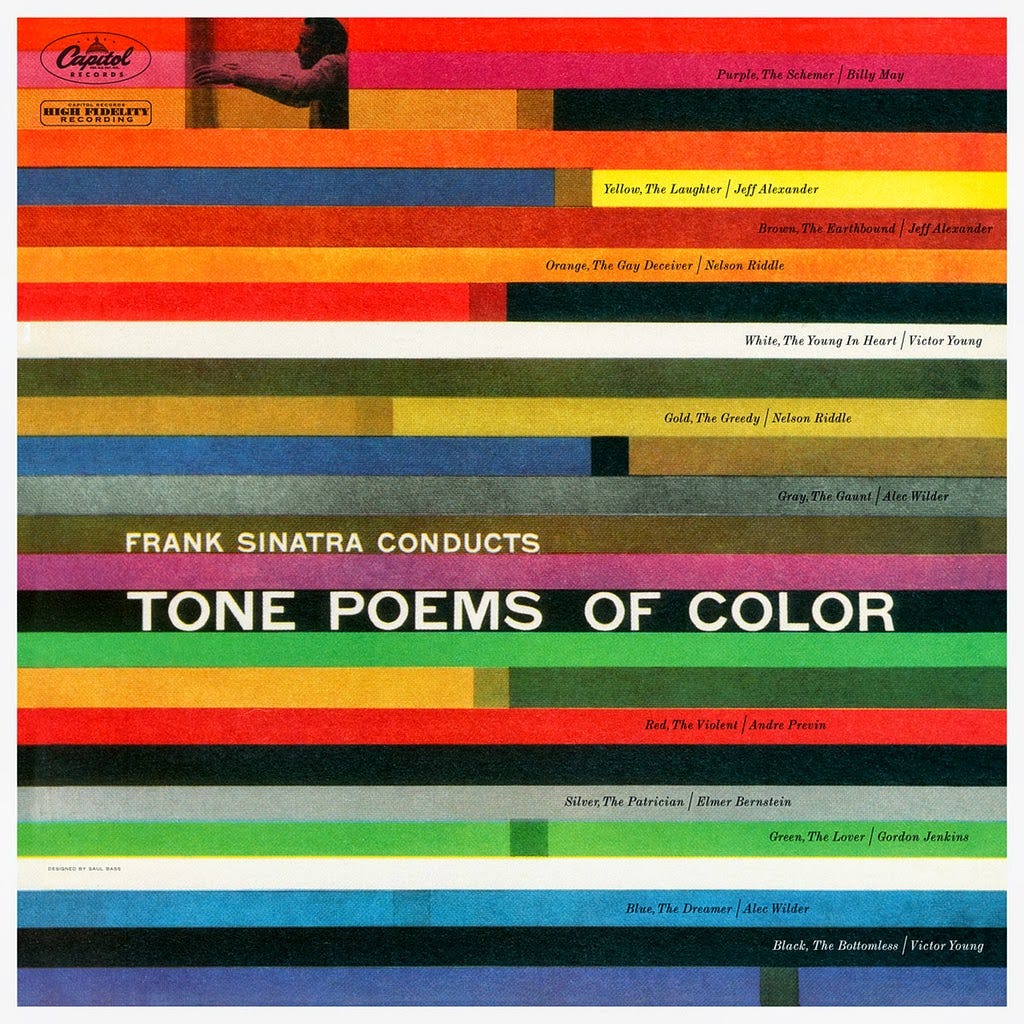
The album contains 12 “tone poems.” Tone poems are orchestral pieces of music that evoke the thoughts and feelings of a poem, short story, novel, painting, landscape, or other non-musical source. Sinatra enlisted the help of 8 of the top composers in Hollywood to put together music inspired by the poetry of radio writer and Sinatra friend Normal Sickel.
"White, The Young in Heart" (Victor Young)
"Green, The Lover" (Gordon Jenkins)
"Purple, The Schemer" (Billy May)
"Yellow, The Laughter" (Jeff Alexander)
"Gray, The Gaunt" (Alec Wilder)
"Gold, The Greedy" (Nelson Riddle)
"Orange, The Gay Deceiver" (Nelson Riddle)
"Black, The Bottomless" (Victor Young)
"Silver, The Patrician" (Elmer Bernstein)
"Blue, The Dreamer" (Alec Wilder)
"Brown, The Earthbound" (Jeff Alexander)
"Red, The Violent" (André Previn)
On the accompanying episode of I’m Old Fashioned, we listened to “Green, The Lover” composed by Gordon Jenkins. This would mark the beginning of several collaborations between Sinatra and Jenkins.
“Green, The Lover” is classic Jenkins. He was a master at writing for strings, and each phrase holds such sweet sadness. Green and lush but marked by the echoes of a past love, one sinks into their chair upon listening and remains there long after the song has ended.
It is no surprise that Sinatra would go on the following year to begin working on a series of albums with Jenkins. Where Are You (1957) was the first Capitol album without Nelson Riddle at the helm…
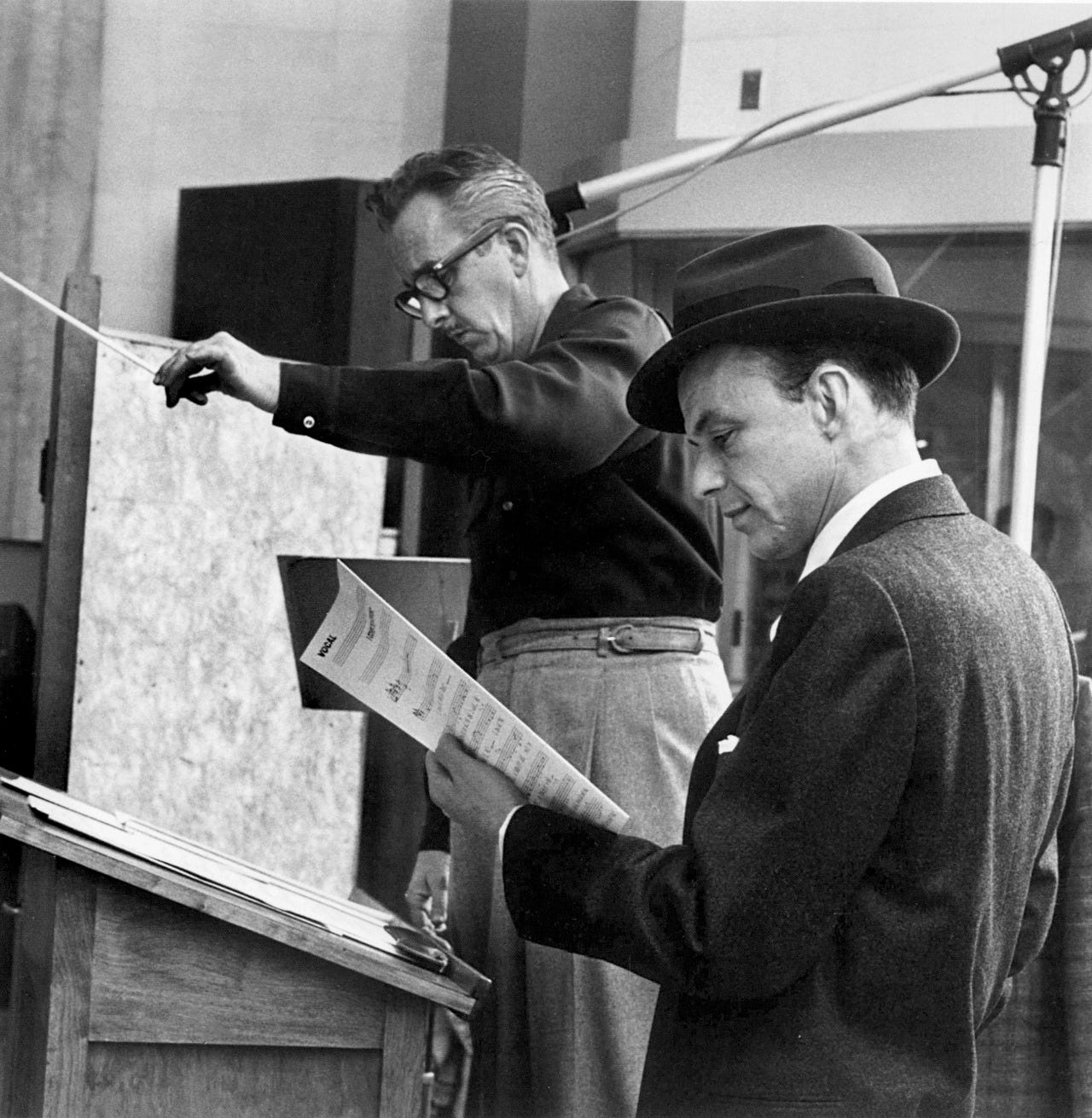
It was followed by pairings on No One Cares (1959), All Alone (1962), and September of My Years (1965). These remain some of their finest albums. They would also work on other projects together, but never in full, like Sinatra’s 1980 Trilogy album, which featured arrangements by Gordon Jenkins, Billy May, Don Costa, and Nelson Riddle.
Not the First Time Conducting
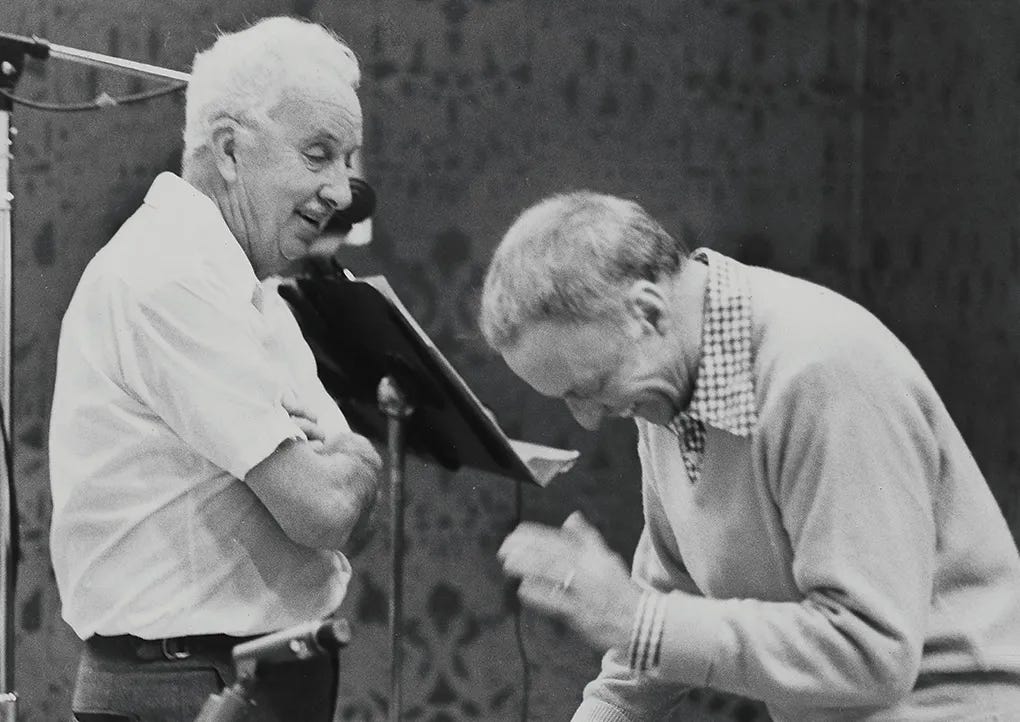
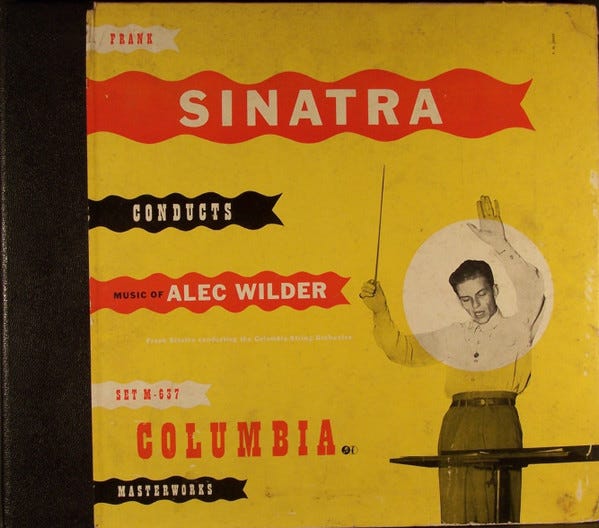
While Sinatra famously never learned to read music, he had an unparalleled ear and feel for everything. Fellow musicians respected and took his lead on many different occasions. Tone Poems of Color was actually the second studio album conducted by Frank Sinatra. Back in 1946, his conducting debut happened on Columbia with Frank Sinatra Conducts the Music of Alec Wilder.
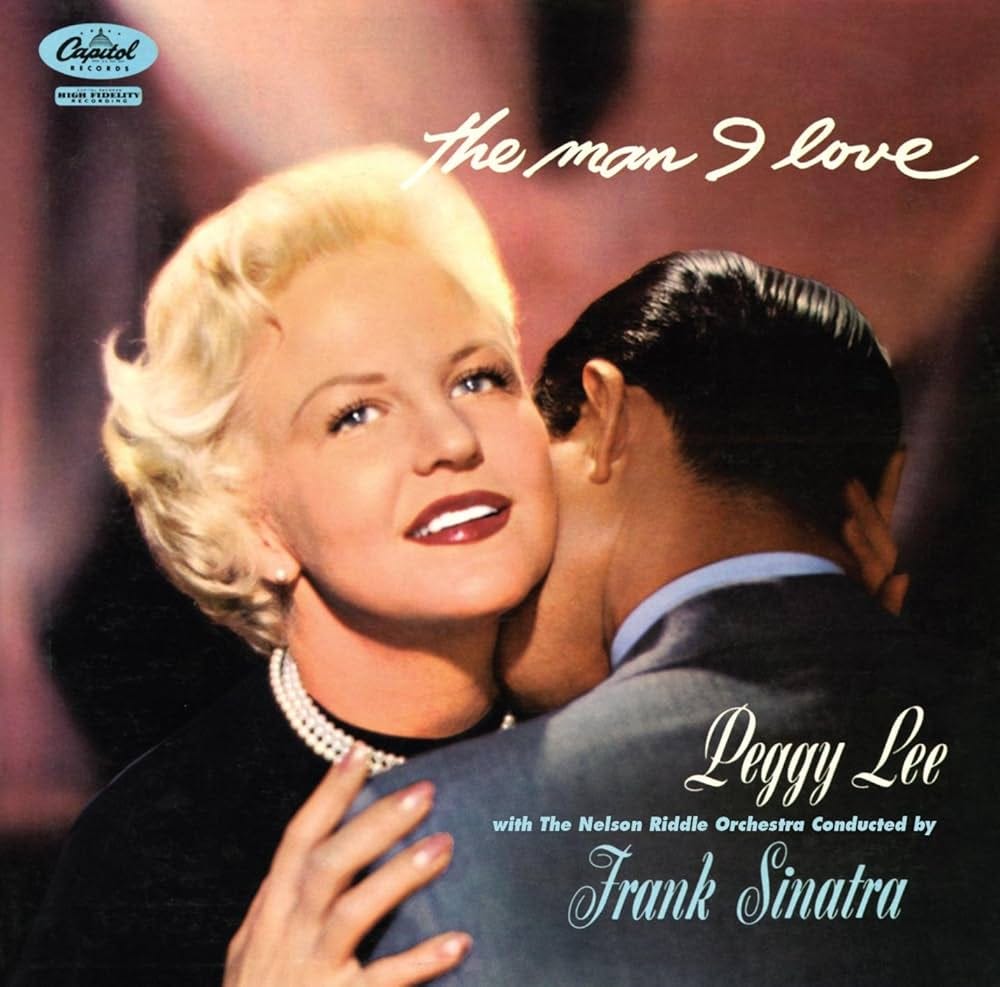
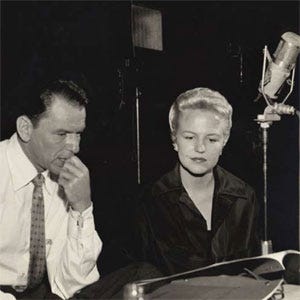
Sinatra would go on to conduct 4 more albums after Tone Poems of Color. Peggy Lee’s return to Capitol in 1957 saw her release The Man I Love, conducted by Frank Sinatra and arranged by Nelson Riddle. Sinatra helped Lee choose the songs for the record and even directed her to think like Billie Holiday when approaching the material.
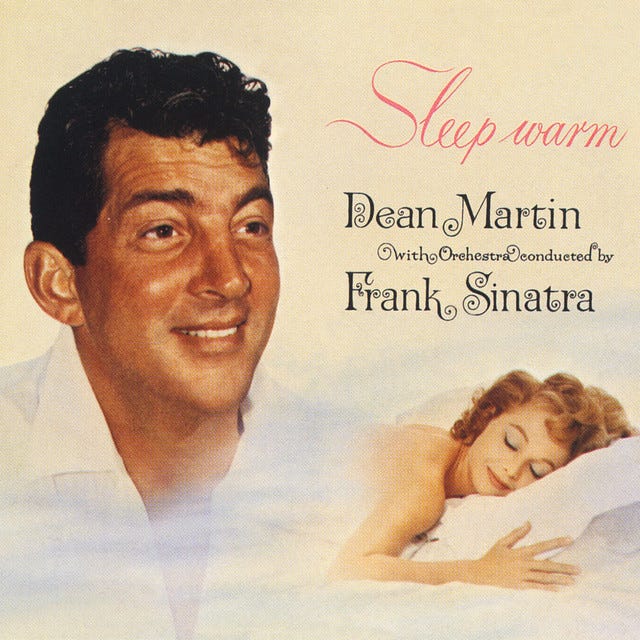
In 1959, Sinatra got behind the podium again to conduct Sleep Warm, a cozy set of bedtime tunes sung by his pal Dean Martin.
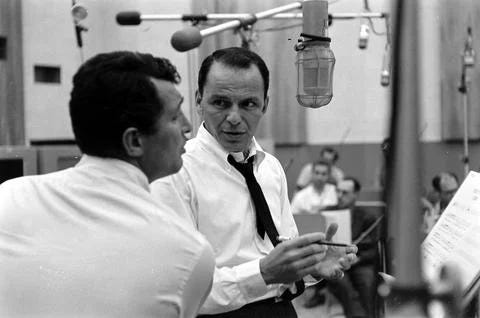
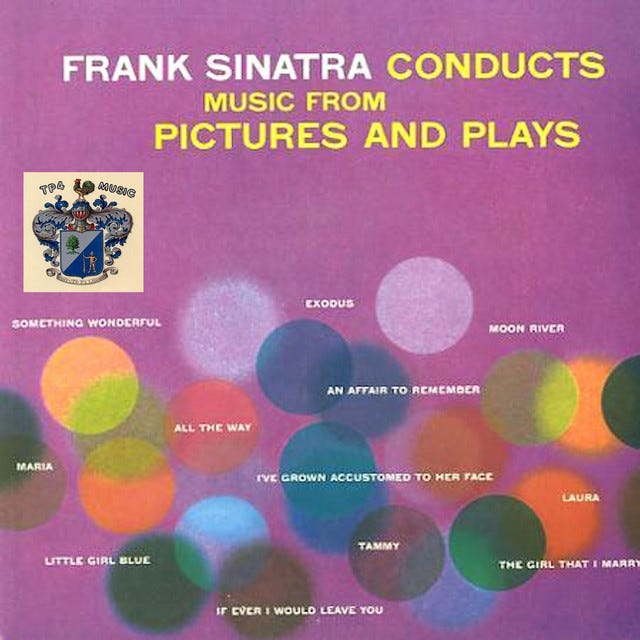
1962 saw him on his newly formed Reprise label with Frank Sinatra Conducts Music from Pictures and Plays.
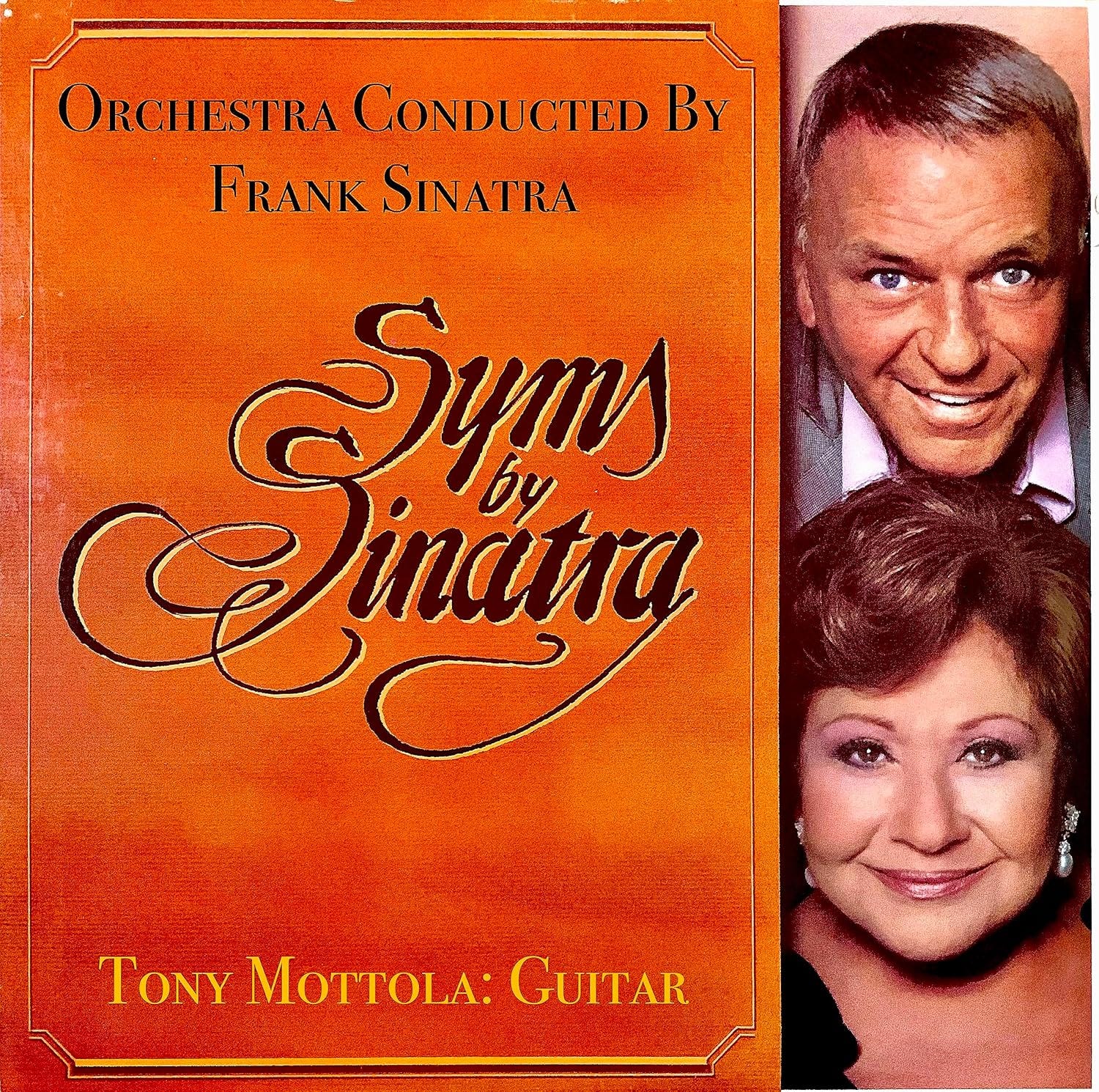
And finally, in 1982, Sinatra got back behind the podium one last time for an album by Sylvia Syms, Syms by Sinatra, arranged by Don Costa.
The Capitol Sound
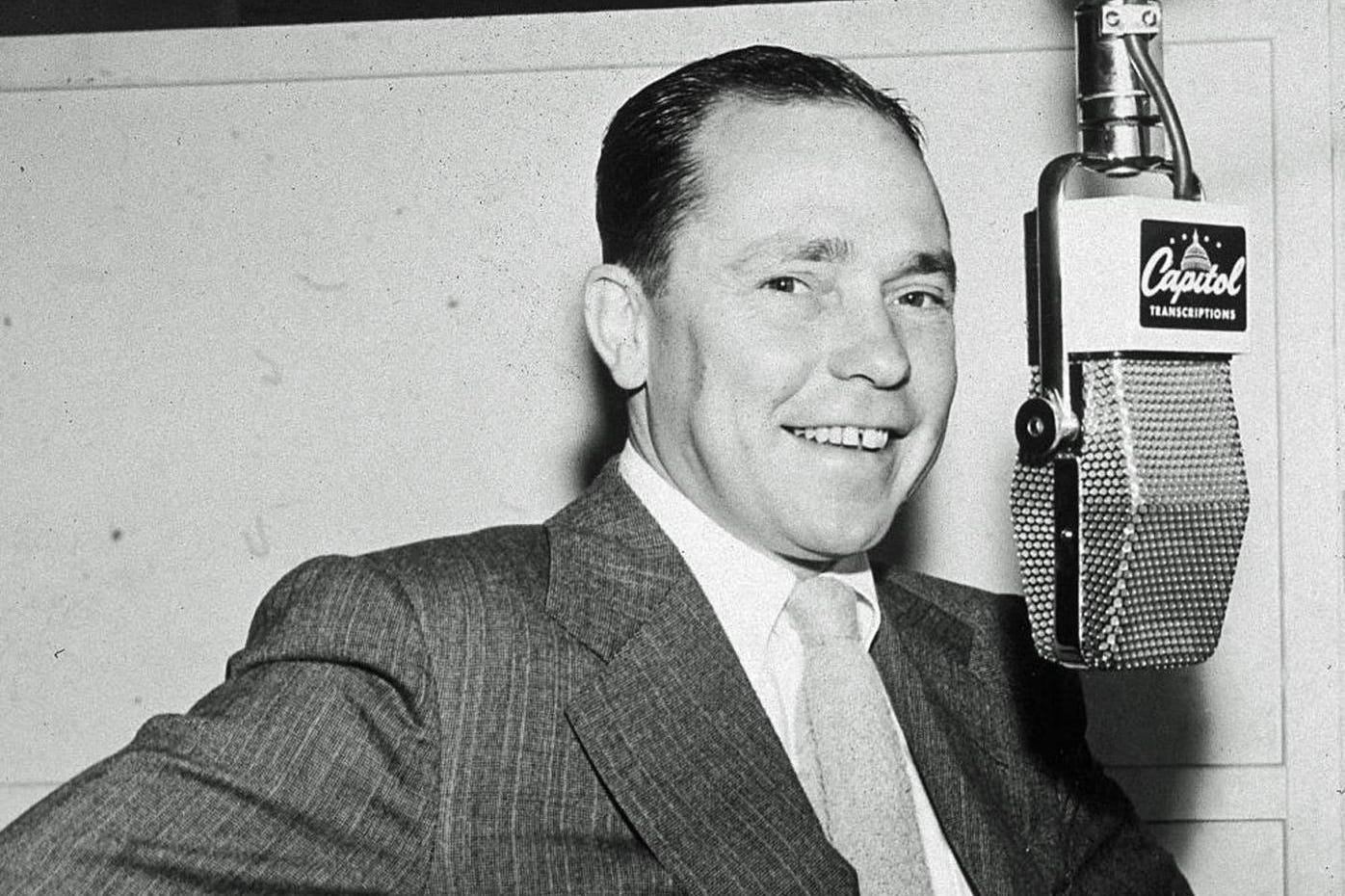
Capitol Records was founded in 1942 by Johnny Mercer, Buddy DeSylva, and Glenn E. Wallichs. On April 6, 1942, Mercer supervised Capitol's first recording session, where singer Martha Tilton recorded the song "Moon Dreams". Shortly after that, Capitol opened up a second-floor office south of Sunset Boulevard, and more high-profile sessions were underway. On June 12th, Paul Whiteman and his band booked in for a session. Trombonist and songwriter Trummy Young brought along his girlfriend, Billie Holiday. Young informed Mercer about a new song he wrote, and Mercer quickly added some lyrics so the song could be recorded at the session. They asked Billie if she’d sing with them, and that song was "Trav'lin' Light". As Billie was under contract to another label at the time, she is simply billed on the record as “Lady Day”.
Capitol quickly became one of the biggest labels in the country, competing with the East Coast labels of RCA, Columbia, and Decca. In addition to their recordings in Los Angeles, Capitol also recorded in New York City.
In 1949, Capitol purchased KHJ Studios on Melrose Avenue, right next to Paramount Studios. The 5515 Melrose Avenue recording studio became their home studio. Previously, Capitol ran sessions out of other studios in the city.
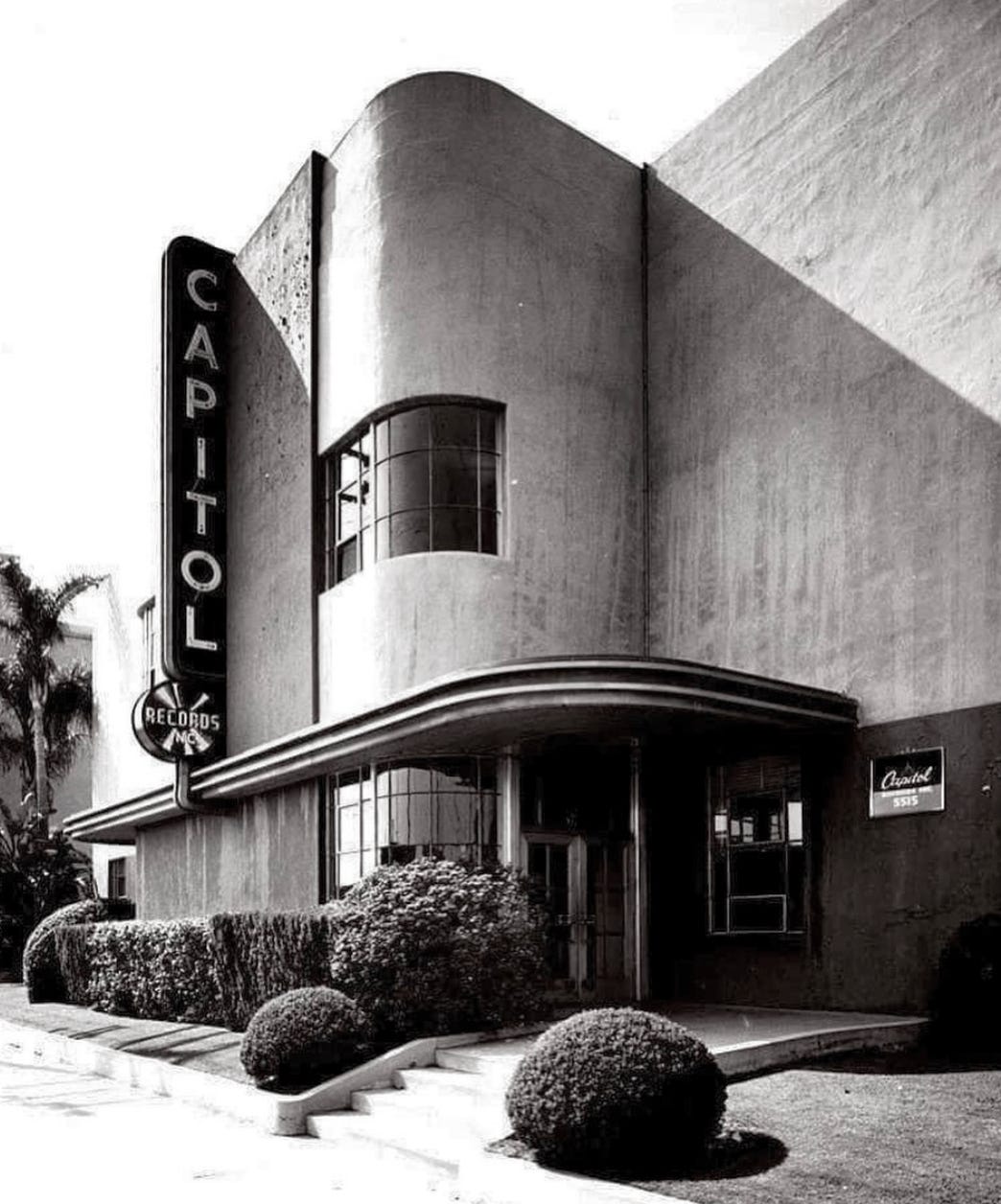
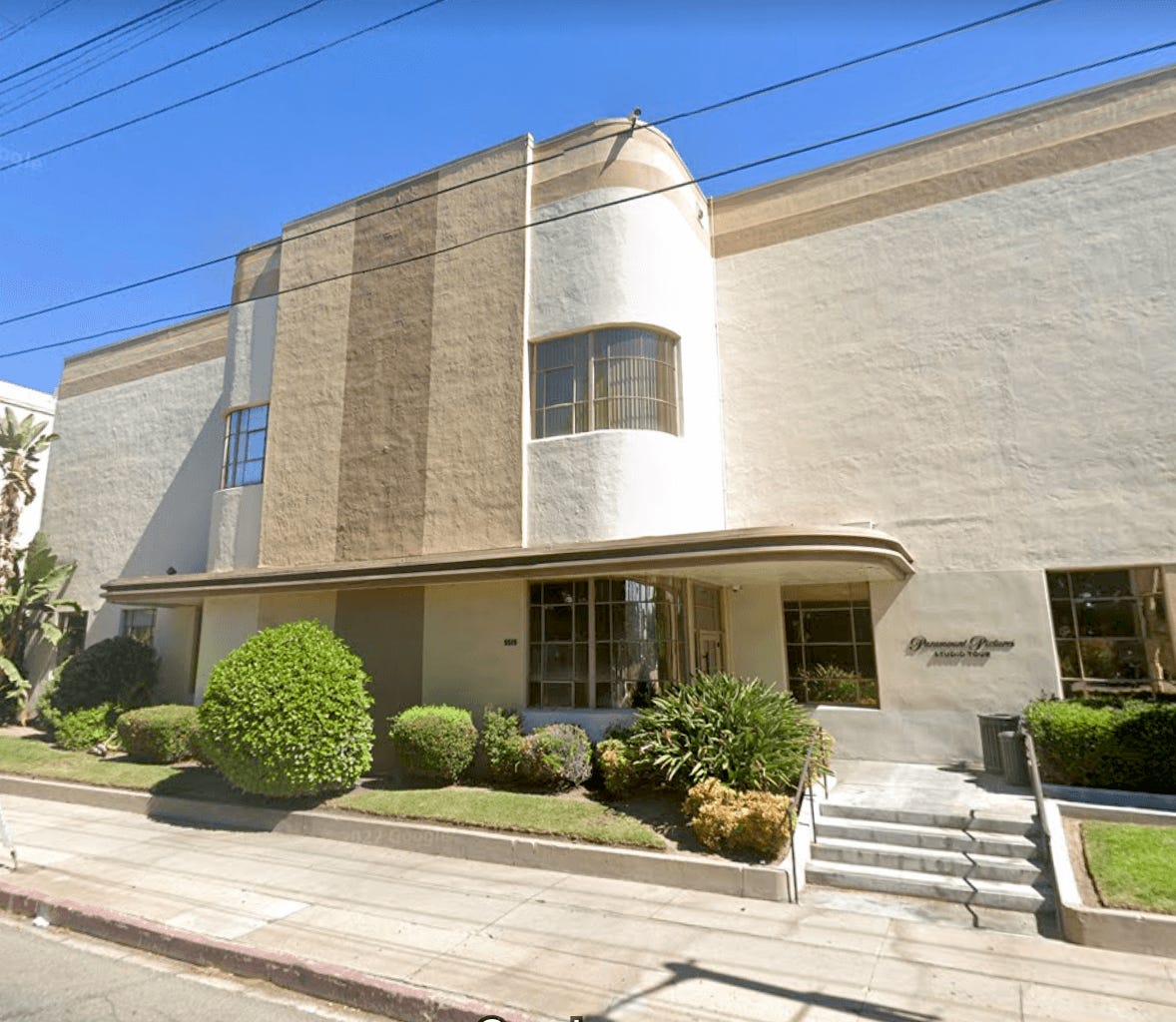
Want to Buy a Record? This wacky 1951 promotional film was not intended for the public and was created to show distributors the process of recording at Capitol Records. It features the comedically bizarre pairing of Mel Blanc and Billy May and is a great (pun intended) record of how it used to be done.


The Capitol Records Tower
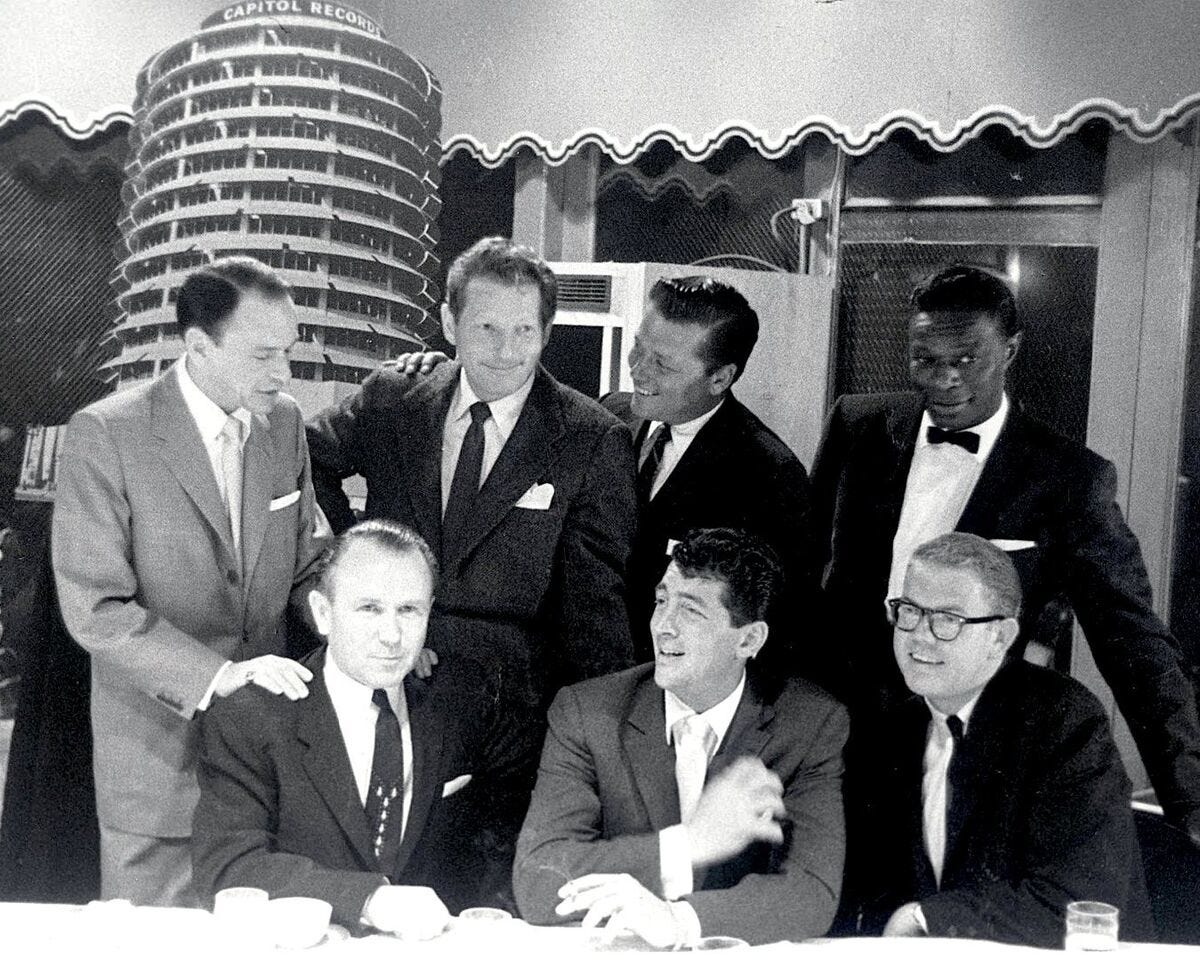
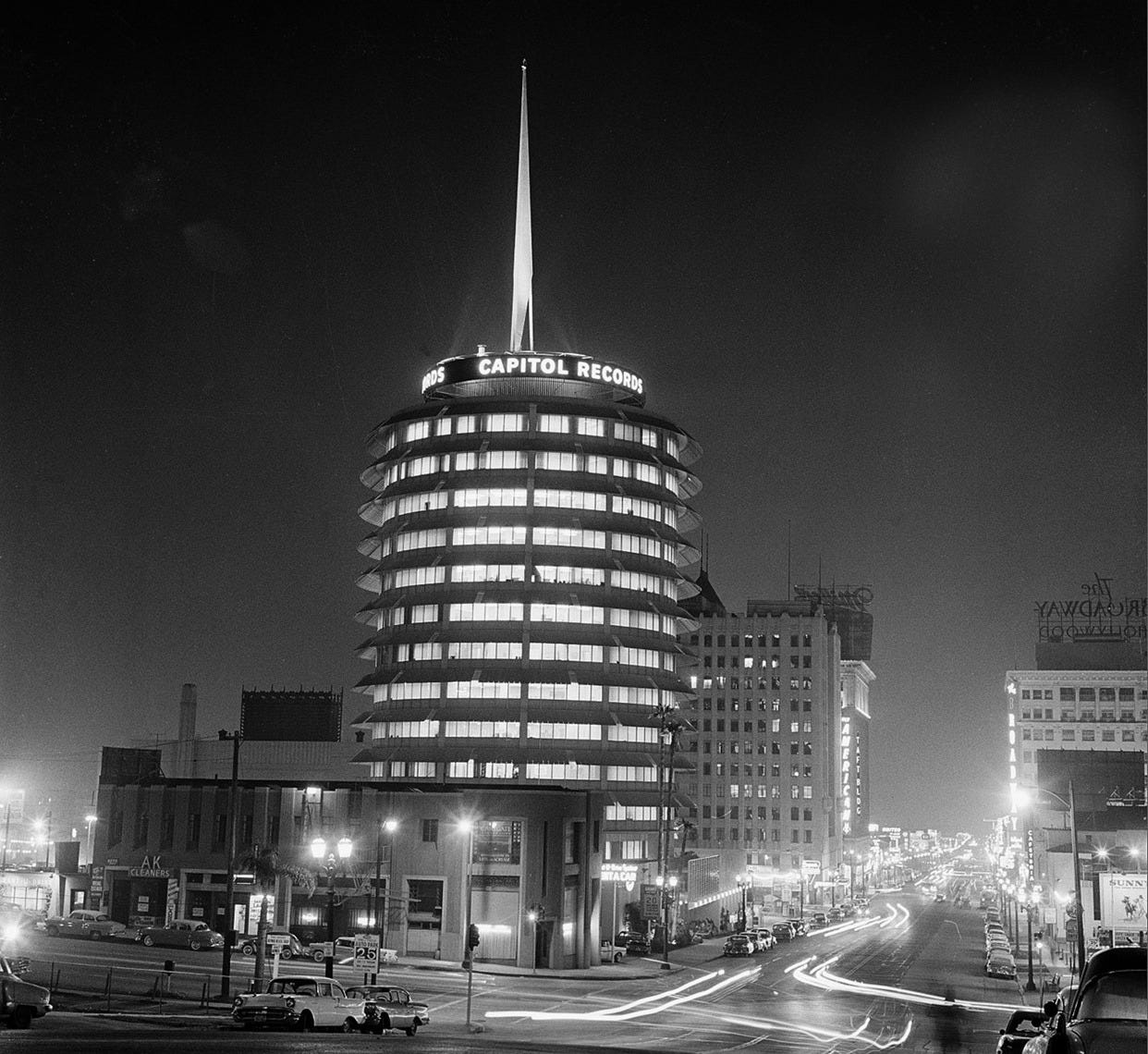
In 1955, Capitol was bought by EMI in Britain, thus making it their North American subsidiary. New plans were underway for the state-of-the-art Capitol Records Tower, which would house the new Capitol Studios on the ground floor.
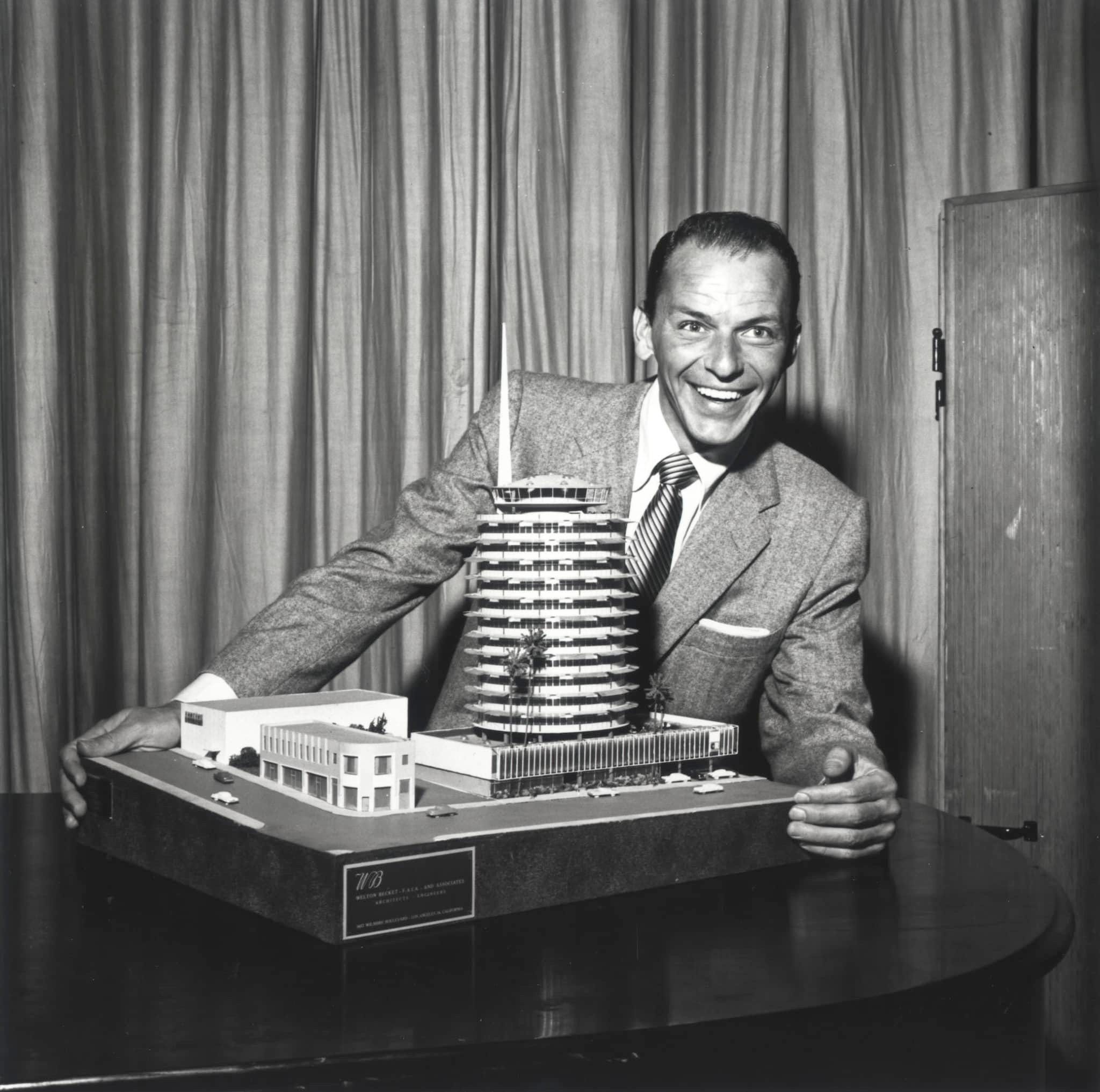
Designed by Welton Becket with Louis Naidorf, the thirteen-story, earthquake-resistant Capitol Records Tower was the world's first circular office building.
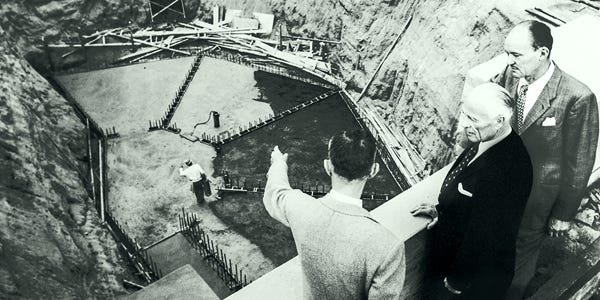
“The Capitol Sound” was due in part to the unique echo chambers placed 30 feet under the parking lot. The great Les Paul designed the first chambers, which were trapezoidal-shaped and constructed with thick concrete walls and ceilings finished with a highly reflective hard lacquer.
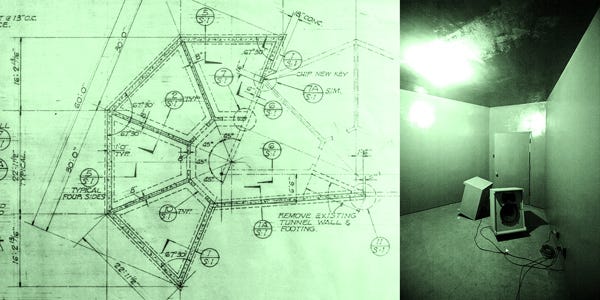
Sound from Capitol's studios or mastering rooms can be sent to speakers in the echo chambers. Microphones capture the sound combined with the chamber's reverberation and send it back to the studio.


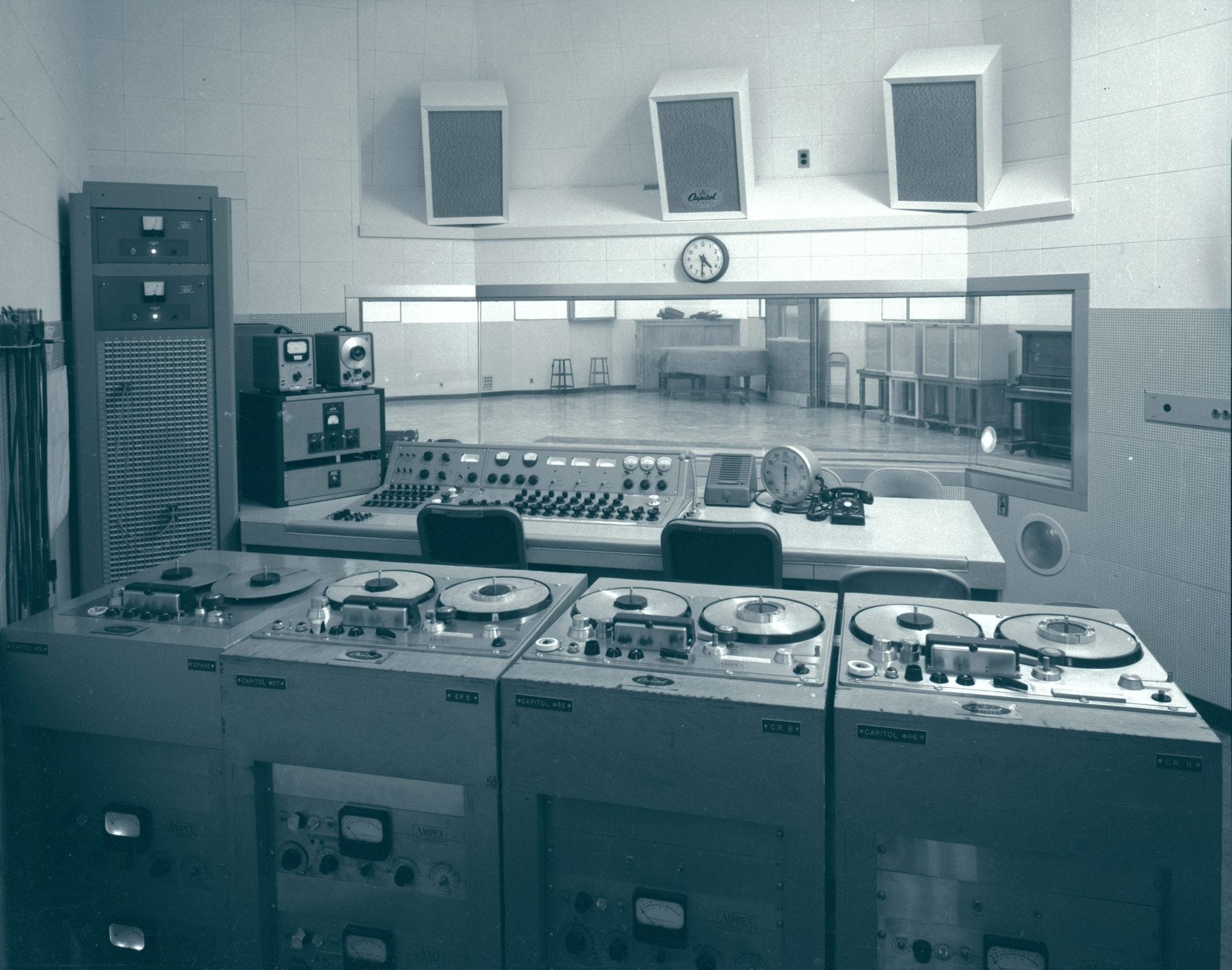
Capitol Studio B
Capitol Studios has two main dedicated recording spaces: studios A & B (which can also be opened up into one studio by removing the retractable wall between the two rooms). Tone Poems of Color was recorded in studio B.
February 22nd, 1956
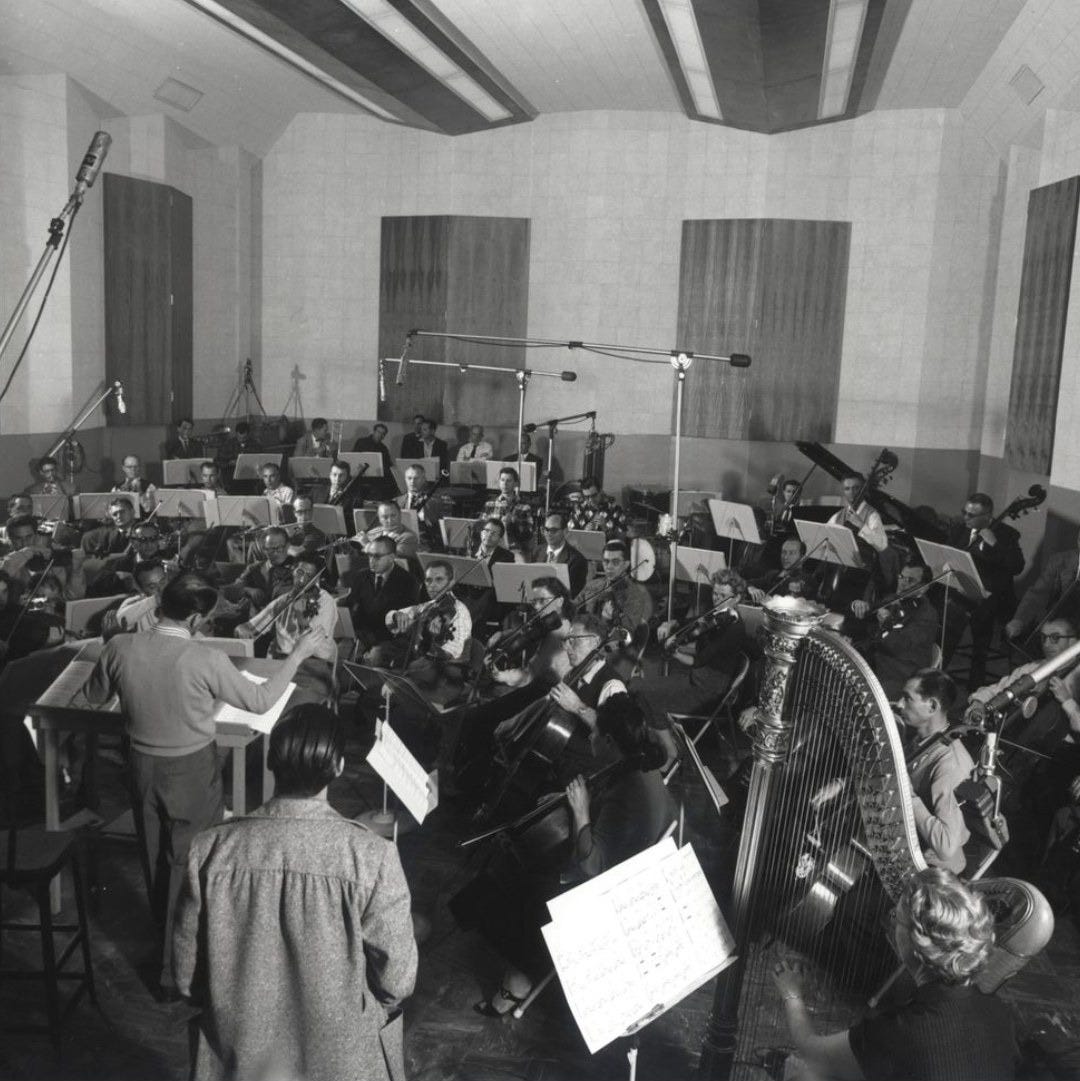
Studio B still has its original adjustable swing-out acoustical panels with a varnished wood hard surface on one side and absorptive fiberglass on the flip side. There are also movable soundproof partitions along the back wall, which can be used for sound separation when recording live ensembles.


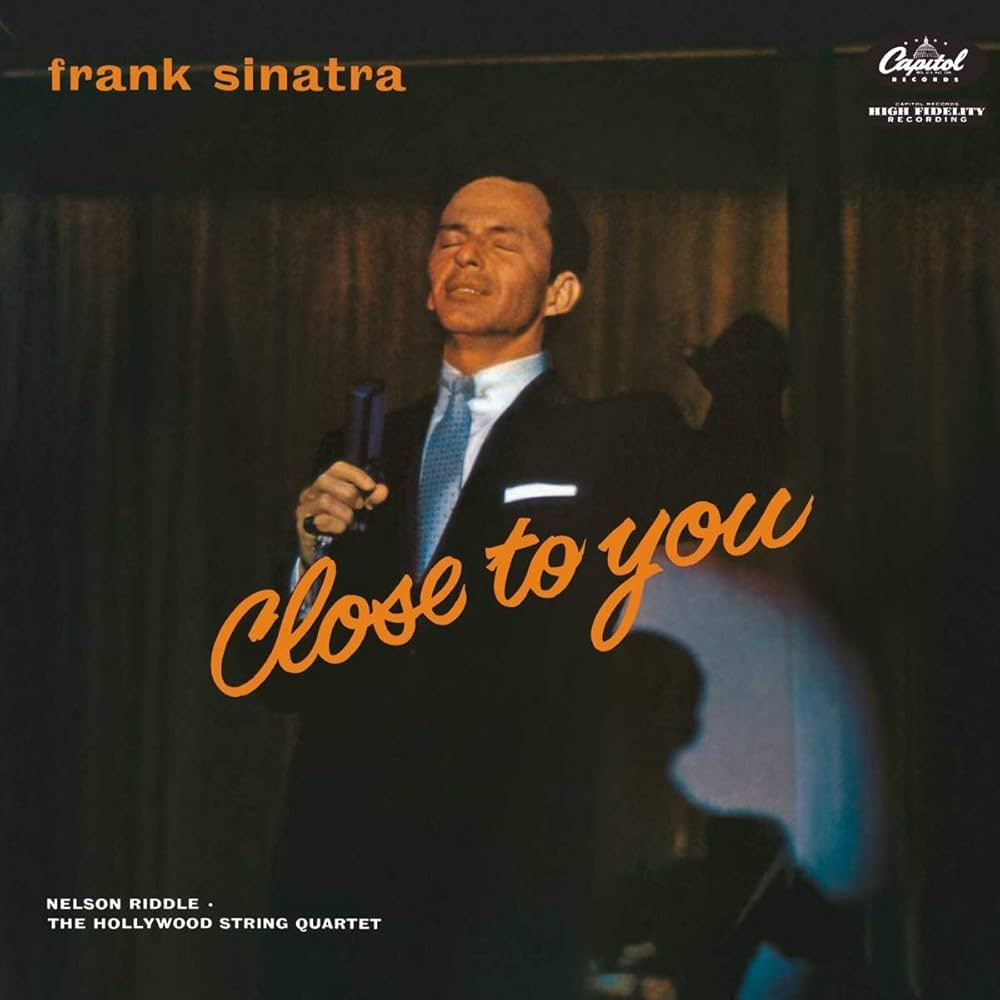
Sinatra would end up stepping behind the mic at Capitol Studios on March 8, 1956, when he began recording material that eventually appeared on his 1957 album Close to You.
The history of recorded music changed drastically on February 22nd, 1956, with the opening of Capitol Studios at The Capitol Records Tower. Countless albums and artists have recorded definitive albums at those studios since then, and it all started with Frank Sinatra, not singing but conducting.
Listen to Episode 1: www.mixcloud.com/imoldfashioned
Thank you for supporting I’m Old Fashioned! I am a fully independent artist; I don’t have a manager, agent, label, or team. On Mixcloud and here on Substack, there is an option to donate and support all my creative endeavours. If you like what is being shared, please consider donating anything you can to help cover the cost of making my art during these times.
Sincerely,
Alex